Cartier watches guide begins not with mechanics, but with design—where time is shaped through form, proportion, and elegance rather than complexity alone. Originating from Paris, Cartier redefined what a watch could represent, transforming it from a purely functional object into a statement of identity.
Unlike traditional Swiss watchmaking houses that emphasize technical mastery above all, Cartier occupies a unique space where jewelry and horology converge. Each timepiece reflects a philosophy rooted in aesthetics, where clean lines, iconic shapes, and timeless refinement take precedence over excess.
Is Cartier Worth Buying?
To question whether Cartier is worth buying is to approach it from the wrong perspective. Cartier is not defined by technical superiority alone, but by its ability to shape identity through design—where elegance becomes a form of expression rather than a feature to be measured.
A Cartier watch is chosen not for complexity, but for presence. It reflects a refined understanding of luxury, where proportion, heritage, and aesthetic clarity matter more than mechanical excess. In this sense, its value lies in how it is perceived, not how it competes.
Why Cartier Watches Are So Expensive
Cartier watches are often perceived as expensive, yet their value cannot be reduced to materials or mechanical complexity alone. What defines their price is the fusion of watchmaking and jewelry design—an approach that prioritizes form, proportion, and visual identity as much as technical execution.
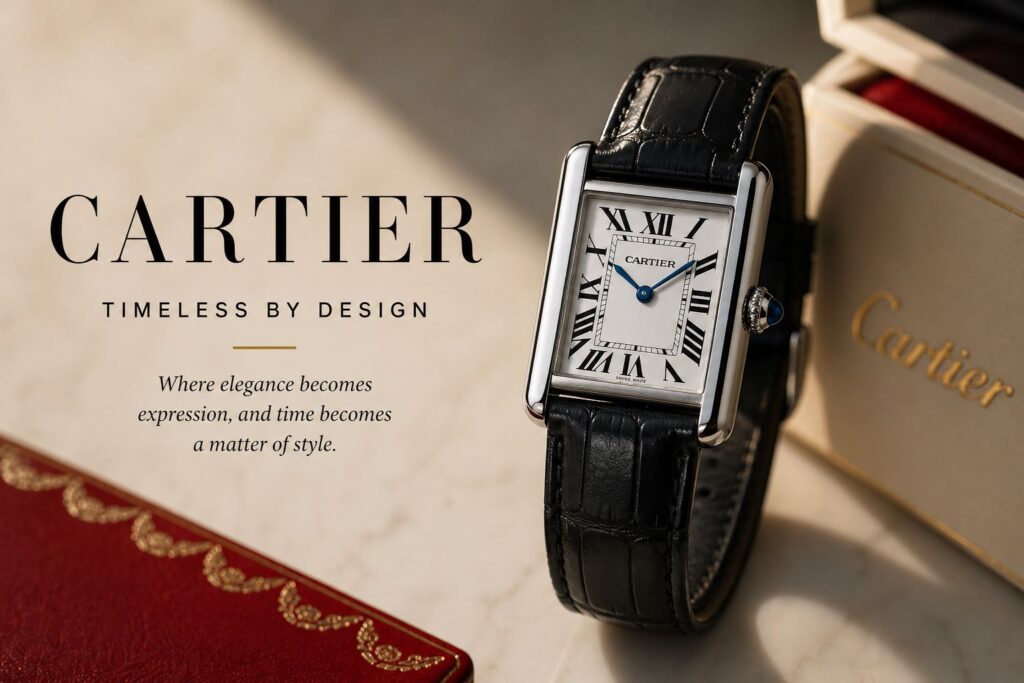
Each Cartier timepiece carries the weight of a design legacy that has shaped the aesthetics of modern watchmaking. Rather than competing through complication, Cartier refines simplicity, creating watches that remain instantly recognizable and culturally relevant across decades.
In this sense, the cost of a Cartier watch reflects more than craftsmanship—it reflects the brand’s influence on how luxury is perceived.
Cartier vs Rolex: Style vs Recognition
Comparing Cartier to Rolex is not a question of which brand is better, but what each represents. Rolex is built on recognition—instantly identifiable, widely respected, and associated with achievement across cultures.
Cartier operates differently. It is not driven by visibility, but by expression. Where Rolex communicates success, Cartier reflects taste—chosen by those who value design, proportion, and understated elegance over immediate recognition.
Understanding this distinction is essential when exploring the broader landscape of luxury watches, where each brand defines its own version of prestige.
Cartier: Questions of Style and Value
Is Cartier considered a luxury watch brand?
Cartier is widely regarded as a luxury brand, not only in watchmaking but across jewelry and design. Its watches represent a fusion of aesthetics and craftsmanship, where visual identity plays as important a role as technical execution.
Are Cartier watches a good investment?
Cartier watches are not typically chosen for investment in the traditional sense. Their value lies in design, heritage, and brand recognition rather than purely financial return.
Why are Cartier watches so expensive?
The price of Cartier watches reflects their unique position between jewelry and horology. Design heritage, iconic shapes, and refined craftsmanship contribute to their perceived value.
Is Cartier better than Rolex?
Cartier and Rolex represent different philosophies. Rolex is built around recognition and technical reputation, while Cartier emphasizes design, elegance, and identity.
Cartier does not seek to compete through complexity or dominance. It exists in a space where design defines identity, and where the meaning of a watch extends beyond timekeeping into personal expression. For those who understand its language, Cartier is not a choice made for comparison, but for alignment.